Services · Fort Bragg, Spring Lake & Fayetteville
Stump Grinding
What's included
- Grinding below grade
- Surface roots near the stump
- Grindings left as mulch or hauled off, your call
- Single stumps or whole-property jobs
Signs it's time
- Old stumps you keep mowing around
- New sprouts coming up from the stump
- Termites or carpenter ants near the house
- Getting ready for a fence, patio, or addition
How stump grinding works
- 01
Mark utilities
Grinding counts as digging. Underground lines need to be located first through NC 811, especially near driveways, meters, and irrigation.
- 02
Clear the area
Rocks, edging, and debris around the stump are removed so the grinder wheel doesn't hit them.
- 03
Grind below grade
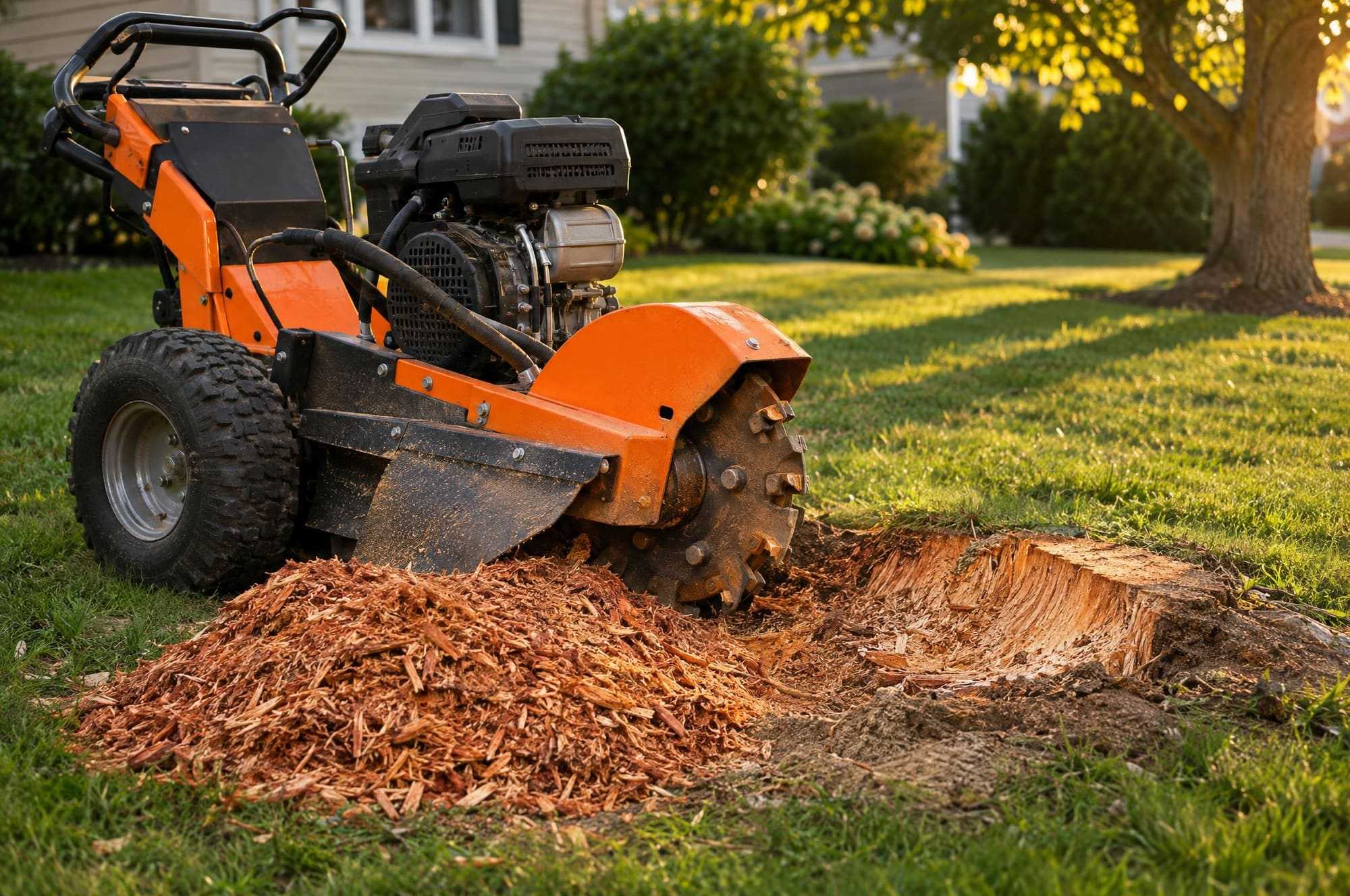
The grinder chews the stump and the big surface roots around it down below the soil line, so you can mow, sod, or plant over the spot.
- 04
Handle the grindings
Grindings can stay as mulch, get raked back into the hole, or be hauled away. Your call.
Ready to get eyes on it?Tell us about the tree and Nelson will follow up.
Get a Quote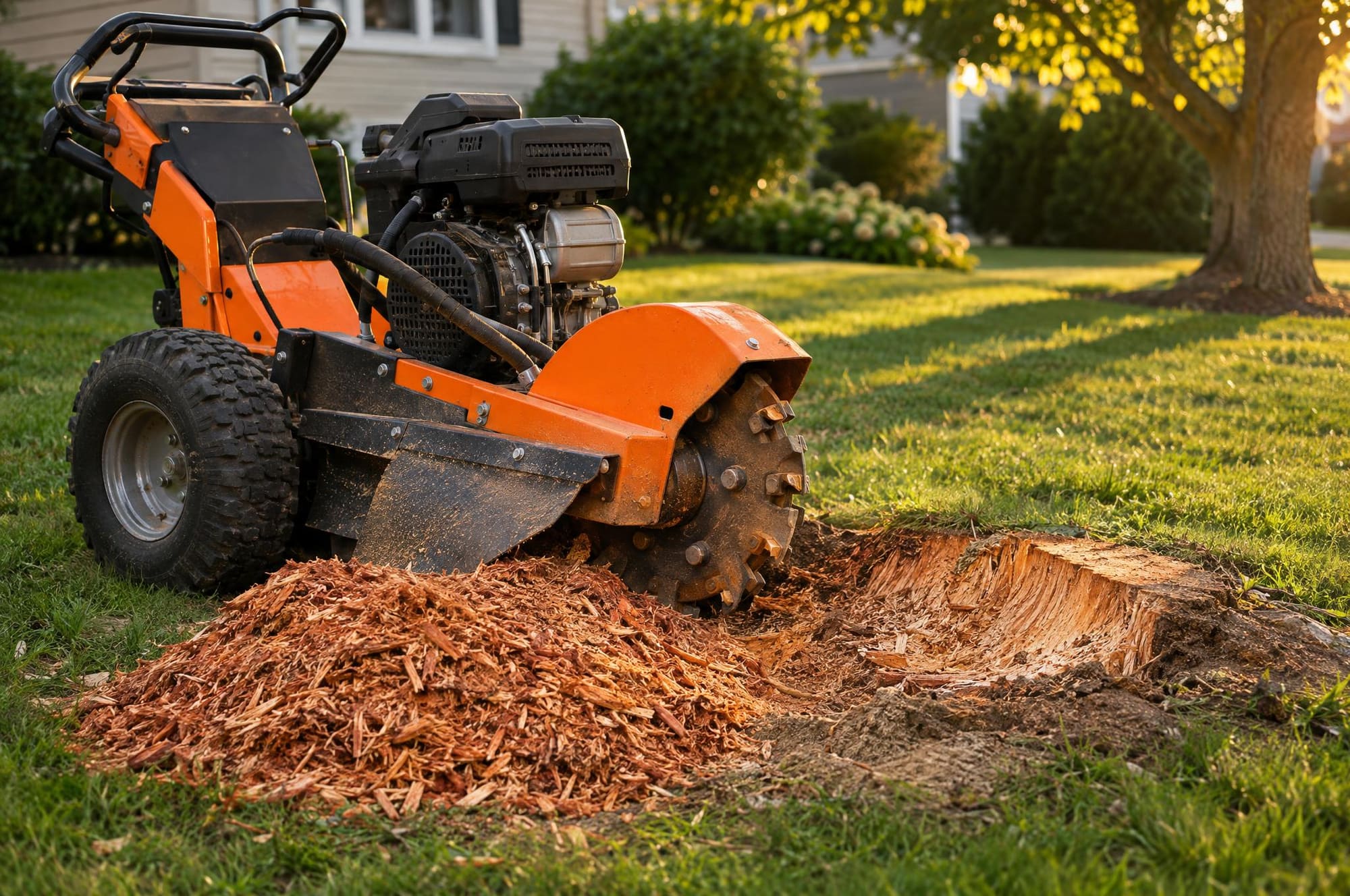
What affects the cost of stump grinding
Stump grinding is priced by the job after seeing the stumps. The factors:
- Diameter
- The biggest factor. Wider stumps take much longer to grind.
- Number of stumps
- Several stumps on one visit are more efficient than separate trips.
- Surface roots
- Big roots running across the lawn add grinding time.
- Access
- Gate width and fences decide how the grinder gets to the stump.
- Cleanup
- Leaving grindings on site versus hauling them away.
After the stump is gone
Grinding removes the stump and the main roots near the surface. The deeper roots stay in the ground and decay naturally over time, which is why grinding is far less disruptive than digging a stump out. Full extraction is usually only worth it where something is being built.
Grindings are mostly wood, and wood breaks down by borrowing nitrogen from the soil. If you're planting grass or a bed in the spot, rake out most of the grindings, add topsoil, and let it settle before seeding or laying sod. Expect the spot to sink a little as the remaining roots decay.
Leftover stumps aren't just in the way. They attract termites and carpenter ants, and some trees common here, like sweetgums, red maples, and Bradford pears, keep sending up sprouts from the stump and roots. Pines generally don't resprout.
Stump Grinding FAQ
How deep do you grind?
Deep enough for what's going there next, below the soil line for lawn, and deeper for beds or construction. Tell us your plans for the spot during the estimate.
Will the tree grow back after grinding?
Pines don't. Some hardwoods, like sweetgum, red maple, and Bradford pear, can send up sprouts from remaining roots for a while. Mowing them down usually exhausts them.
Can you grind a stump next to my house or fence?
Usually, yes. Grinders can work close to structures, but very tight spots near foundations, fences, and buried lines take extra care. We'll look at it during the estimate.
What do I do with the hole afterward?
Rake out most of the grindings, fill with topsoil, tamp it down, and give it time to settle before seeding or sodding.
Tree still standing? We handle the whole job, starting with tree removal.
Got a tree problem? Let's get eyes on it.
Tell us what's going on and send a photo or two. Nelson will follow up to set up a time to look at it.