Services · Fort Bragg, Spring Lake & Fayetteville
Storm Damage Cleanup
Safety first
Tree on your house right now? Get everyone out of the rooms under it and stay away from downed lines. If lines are involved, call 911 and your utility first. Take photos for insurance, then request help below.
What's included
- Trees on homes, fences, vehicles, and outbuildings
- Hung-up limbs and split trunks made safe
- Uprooted and snapped trees cut and cleared
- Photos of the damage to support your insurance claim
Signs it's time
- Tree or large limb on a structure
- A tree that started leaning after a storm
- Broken limbs still hanging in the canopy
- Root plate lifted or cracked soil at the base
How storm damage cleanup works
- 01
Make it safe first
We assess the scene before touching anything: limbs hung up in the canopy, trunks and branches bent under tension, root plates that could shift, and any lines involved. If lines are down, the utility goes first.
- 02
Document it
Photograph the damage from several angles before anything is moved. Your insurance company will want to see it as it landed.
- 03
Remove the hazard
Storm-damaged wood is often loaded like a spring. It's cut in a planned order, with pieces lowered off structures rather than dropped onto them.
- 04
Clear and clean up
Debris is cut, chipped, or hauled, and the yard is cleaned up so you can see what repairs are needed.
Ready to get eyes on it?Tell us about the tree and Nelson will follow up.
Get a Quote
What affects the cost of storm damage cleanup
Storm work is quoted on site, because no two storm jobs look the same. What affects it:
- Whether it's on a structure
- A tree resting on a roof has to come off in small, controlled pieces.
- Tension and tangling
- Trees twisted together or bent under load take more time to cut safely.
- Size and amount of debris
- One limb versus a whole uprooted pine.
- Access
- Downed trees often block the easy way in.
- Hauling
- Removing all debris versus cutting and stacking it on site.
Storm damage around Fort Bragg and Fayetteville
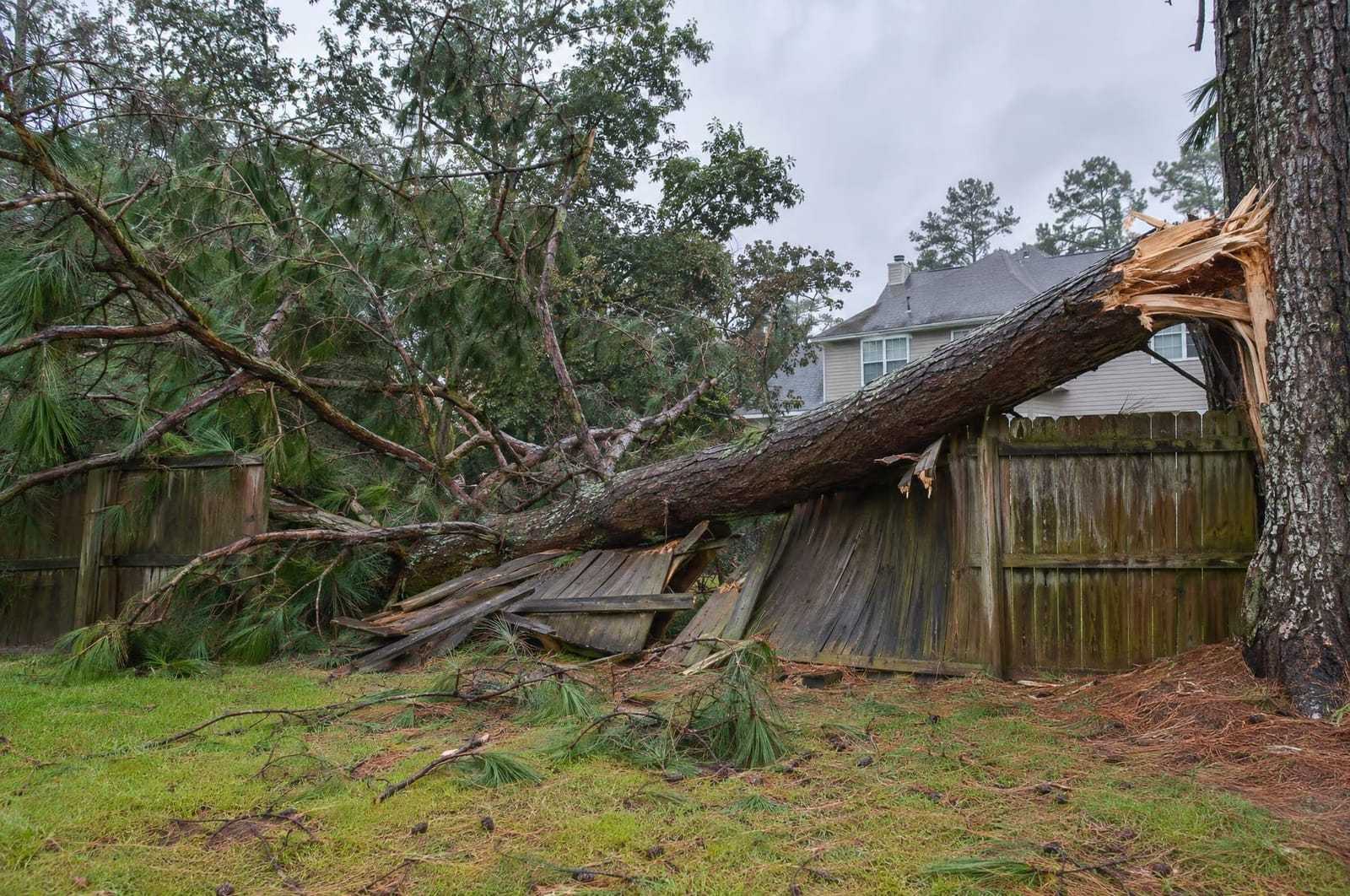
Hurricanes like Matthew and Florence showed what happens here when days of rain saturate sandy soil and tropical-storm winds hit tall pines: whole trees uproot, and big limbs come down on houses, fences, and cars. Summer thunderstorms do the same thing on a smaller scale every year.
Storm-damaged trees are some of the most dangerous trees to work on. A bent limb can spring back with tremendous force when it's cut, a 'hanger' caught in the canopy can drop without warning, and an uprooted tree can rock back onto its stump once weight comes off it. That's why DIY chainsaw cleanup after storms sends so many people to the hospital.
On insurance: coverage varies by policy. Many homeowners policies cover removing a tree that damages a covered structure, and some cover debris removal up to a set limit. Check with your agent, and take photos before anything is moved.
The best storm cleanup is the one you prevent. See our hurricane prep checklist for what to look for before the season starts.
Storm Damage Cleanup FAQ
Should I cut the tree off my roof myself?
No. Trees on structures are often under tension, and the weight shifts as pieces come off. Keep everyone out of the affected rooms, take photos, call your insurer, and let a professional take it off in controlled pieces.
Will homeowners insurance pay for tree removal after a storm?
Often, if the tree damaged a covered structure like your house or a fence. Coverage for trees that fall in the yard without hitting anything is more limited and varies by policy. Your agent can tell you what your policy covers.
My neighbor's tree fell on my property. Who pays?
Usually your own homeowners policy covers damage to your property from a storm, regardless of where the tree came from. If the tree was clearly dead or hazardous beforehand, the neighbor's liability may come into play. Ask your insurance agent.
What should I do while I wait for help?
Stay clear of the tree and any wires, keep kids and pets away, and don't pull on hanging limbs. If lines are down or touching the tree, call 911 and your utility. Take photos for insurance.
Tree just came down? Read what to do after a tree falls.
Got a tree problem? Let's get eyes on it.
Tell us what's going on and send a photo or two. Nelson will follow up to set up a time to look at it.